Sunday 29 / November / 2026
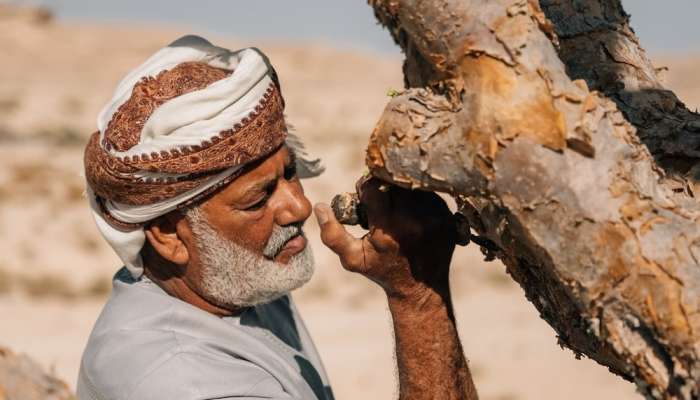
Dhofar: The Sultanate of Oman is taking significant steps to preserve its centuries-old frankincense heritage while developing a sustainable industry based on scientific research, responsible harvesting and modern manufacturing, with major initiatives underway in Wadi Dawkah and Wadi Ghazal in Dhofar Governorate.
Wadi Dawkah Nature Reserve, home to thousands of frankincense trees, is one of the four sites comprising the Land of Frankincense, which was inscribed on the UNESCO World Heritage List in 2000. The reserve represents an important part of Oman's historical, commercial and cultural heritage, reflecting the role of frankincense in ancient trade networks, traditional medicine, religious practices and the global perfume industry.
As part of efforts to protect this heritage, Dar Amwaj signed an agreement with the Ministry of Heritage and Tourism in 2022 to sponsor the Wadi Dawkah Reserve, establishing a partnership focused on environmental conservation and the sustainable use of natural resources.
In November 2025, Amwaj laid the foundation stone for the Ain Doka project, which comprises a visitor centre and a specialised frankincense oil extraction plant. Scheduled to open towards the end of autumn 2027, the project aims to introduce visitors to the history, cultural significance and scientific aspects of Omani frankincense.
The visitor centre will feature educational and interactive spaces covering the biological, archaeological, cultural and environmental dimensions of frankincense. It will also showcase the traditional uses of the natural resource and its evolution into an important ingredient in the international perfume industry.
The project will include a factory to extract essential oils from frankincense resin, alongside a café and boutique offering visitors a broader experience of the heritage and products associated with the reserve.
Meanwhile, Wadi Dawkah is adopting modern technologies to improve the management of its natural resources. The locations of approximately 6,000 frankincense trees have been mapped using geographic tracking technologies, making the reserve the first smart forest in the Gulf region.
In March 2025, a Scientific Advisory Committee comprising Omani and international experts was established to conduct studies on frankincense trees, their surrounding environment and the factors affecting their growth and sustainability.
The reserve also received international certification from the Fair Wild Foundation in August 2025 for its commitment to ethical and responsible harvesting practices, becoming the first natural ingredient sourcing site in the Arabian Peninsula to obtain the accreditation.
Extending these efforts, Amwaj signed a strategic partnership agreement with the Ministry of Agriculture, Fisheries and Water Resources in June 2026, with support from the Agricultural and Fisheries Development Fund, to develop sustainable frankincense harvesting practices in Wadi Ghazal.
The initiative covers an area of approximately six square kilometres and includes field surveys, production monitoring, quality assessment and the development of technical databases to document harvesting quantities and product standards.
It also focuses on training and employing local residents in harvesting and field-monitoring operations under the supervision of international specialists, strengthening community participation and creating sustainable employment opportunities.
Frankincense harvesting has already commenced in Wadi Ghazal. The project is expected to produce at least 600 kilogrammes annually, according to Matthew Wright, Director of Natural Ingredients Platforms at Amwaj. The harvested resin will be transported to the Ain Doka factory for essential oil extraction and subsequent use in luxury perfume manufacturing.
Wright said the company had directed significant investments towards Wadi Dawkah and Wadi Ghazal to support the conservation of frankincense trees, promote sustainable harvesting and raise awareness of the historical and environmental importance of both sites.
He added that the initiative seeks to establish an international model for managing frankincense resources by combining specialised expertise with the participation of young people and local communities in Dhofar.
Mohammed bin Faraj Al-Istanbuli, Supervisor of Wadi Dawkah Reserve, said the annual frankincense harvesting season begins in October and continues until June, with a 21-day interval between the first and second incisions made on each tree.
He noted that approximately 100 kilogrammes of frankincense are harvested annually from around 250 trees in Wadi Dawkah, stressing that regulated harvesting and adherence to specified intervals are essential to maintaining tree health and ensuring sustainable production.
The initiatives in the two valleys reflect Oman's efforts to transform frankincense conservation into an integrated economic and environmental model encompassing scientific research, responsible harvesting, processing, manufacturing and international marketing.
Through these projects, Oman seeks to strengthen the global position of its frankincense industry, expand the value chain of locally sourced natural ingredients and preserve a heritage that has remained closely connected to the country's identity and civilisation for thousands of years.