Wednesday 18 / November / 2026
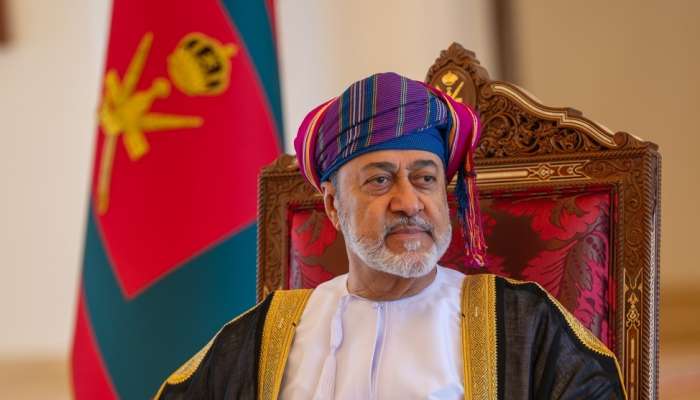
Muscat—- The Sultanate of Oman will mark the day after tomorrow, Friday, its National Day, which falls on the 20th of November each year. The occasion comes amid a continuous national march led by His Majesty Sultan Haitham bin Tarik. That march is dedicated to consolidating the achievements of the modern Omani Renaissance and pressing forward towards broader horizons of comprehensive and sustainable development.
This national occasion comes amid the renewed renaissance witnessed by the Sultanate of Oman, grounded in Oman Vision 2040, which aims to raise the competitiveness of the national economy, diversify sources of income, empower youth, improve the quality of life and provide the foundations for prosperity and well-being.
The Sultanate of Oman is proceeding with the implementation of the Vision's targets through national programmes and projects across various sectors, building on the harnessing of national capabilities and potentials, the development of productive and service sectors and the building of a diversified economy capable of keeping pace with regional and international changes.
The First Quarter Report of the Oman Vision 2040 revealed five years of transformation and progress in the national development march during the period (2020–2025), encompassing various economic, financial, social and environmental aspects. Average annual economic growth rose to about 3.2 percent during the period (2021–2025), the contribution of private investment and foreign direct investment (FDI) increased, public debt declined from 65.9 percent to 34.6 percent of GDP. The Sultanate of Oman regained its classification within the investment-grade category.
The contribution of renewable energy rose to 9 percent of total energy consumption, the social protection umbrella expanded to more than 1.5 million beneficiaries by the end of 2025. Additionally, theindicators of innovation and human development advanced, alongside the modernisation of the legislative and regulatory system.
The report highlighted the Sultanate of Oman's progress in a number of global competitiveness indicators, including the Economic Freedom Index, in which it advanced from 76th place in 2020 to 39th place in 2026. In the Environmental Performance Index, Omanadvanced 61 places to reach 49th globally, while indicators of governance, government efficiency, regulatory quality and youth development also improved.
Efforts continue within the framework of the Eleventh Five-Year Development Plan (2026–2030), which focuses on achieving economic and social development priorities, expanding the role of the private sector, raising the efficiency of spending and investment, and providing job opportunities for national talents.
On the economic and financial front, the Sultanate of Oman achieved during 2026 indicators reflecting the continuation of its efforts to consolidate financial sustainability and enhance confidence in the national economy. Standard & Poor's confirmed last September its credit rating for the Sultanate of Oman at investment grade (BBB-) with a stable outlook, and raised its forecasts for real GDP growth to about 3.5 percent during 2026.
The agency expected a fiscal surplus equivalent to 4.8 percent of GDP, while foreign exchange reserves reached about USD 19.5 billion by the end of June 2026, in an indication of the national economy's ability to confront external variables.
On the public finance side, state public revenues rose by 16 percent by the end of the third quarter of the current year, reaching about RO 9.828 billion, compared with about RO 8.481 billion during the same period of 2025.Public spending amounted to about RO 9.738 billion, bringing down the fiscal deficit and enabling the state's general budget to record a financial surplus of about RO90 million.
Public debt declined by the end of the third quarter of 2026 by about RO 600 million to reach RO 14.1 billion, while the dues of the private sector settled by the Ministry of Finance amounted to RO 1.434 billion, contributing to providing liquidity to institutions and companies and supporting their ability to continue their economic activities.
Within the framework of economic diversification efforts, the Gross Domestic Product of the Sultanate of Oman at constant prices recorded growth of 5.1 percent during the second quarter of 2026, reaching about RO 9.9 billion, driven by a rise in oil activities by 14.7 percent and non-oil activities by 0.7 percent.
At the level of economic activities, the GDP of the wholesale and retail trade sector at current prices rose by 5 percent during the first half of 2026, reaching about RO 1.735 billion, while foreign investment in the sector rose by 9.7 percent to reach about RO 305.3 million.
Non-oil economic activity recorded growth of about 1.3 percent year-on-year during the same period, according to Standard & Poor's data.
In the trade and logistics services sector, cargo volumes rose at Salalah Port by 15 percent and at Sohar Port by 52 percent during the first half of 2026, reflecting the growing logistics activity and the importance of Omani ports in supporting regional and international trade movement and diversifying sources of income.
Within the efforts aimed at enhancing the Sultanate of Oman's standing on the global finance and business map, 2026 witnessed advanced steps represented by the establishment of the International Financial Centre of Oman, issued by Royal Decree No. (8/2026), which comes in line with the strategic orientations of the Sultanate of Oman aimed at diversifying the national economy, enhancing its position as a global centre for financial services, attracting capital and supporting innovation.
The Centre aims to attract capital and regional and international financial, banking and investment institutions, including institutions operating in conventional and Islamic banking, financial services and insurance, provide an enabling environment for investment management, company establishment and commercial partnership building, support financial innovation, knowledge transfer and the creation of quality job opportunities for national cadres.
During 2026, the Centre witnessed important institutional steps to complete its legislative, regulatory and operational system, represented by the appointment of its Board of Directors in June 2026, chaired by His Highness Sayyid Theyazin bin Haitham Al Said, Deputy Prime Minister for Economic Affairs. The Board held its meeting to follow up on the progress of establishment work and complete the frameworks regulating its operation, enhancing its readiness to attract global institutions and investments and consolidating the Sultanate of Oman's position as a regional and international financial centre linking the markets of the Gulf, South Asia and East Africa.
On the social front, the state's general budget for 2026 allocated about RO 614 million to the Social Protection System, and allocations to support electricity, water, transport, food commodities and petroleum products, providing a social protection umbrella and contributing to alleviating the living burdens on citizens.
From January of 2026 until 10 October 2026, the Sultanate of Oman witnessed the inauguration of diverse development, service and investment projects, the announcement of new projects and the laying of foundation stones for others, within efforts aimed at developing basic infrastructure, upgrading public services, developing economic sectors and expanding investment opportunities in various governorates.
In the health sector, A’Suwaiq Reference Hospital in North Al Batinah Governorate was inaugurated on 7 January at a cost exceeding RO 75 million, with a capacity of 260 beds expandable further. Khasab Reference Hospital in Musandam Governorate was inaugurated on 11 January, alongside the Central Public Health Laboratory in the Wilayat of A’Seeb, which contributes to developing laboratory testing and public health capabilities.
The sector also witnessed the inauguration of the new expansion project at Sur Hospital on the first of April, Izz Pharma Factory in A’Dakhiliyah Governorate on 22 April, and Mahout Hospital in Al Wusta Governorate on 29 April, at a cost of RO 17 million.
In the industrial sector, efforts continued to localise industries and raise the added value of local resources through projects in industrial cities and economic and free zones, including chemical, food and manufacturing industries, and the launch of the first phase of the wind turbine manufacturing project in the Special Economic Zone at Duqm, with an investment exceeding RO 70 million and an annual production capacity of up to 1000 megawatts. The Special Economic Zone at Duqm witnessed the implementation of infrastructure development projects, including the opening of traffic movement in the dualisation project of the road linking Duqm Airport and the crude oil tanks in Ras Markaz, with a length of 51 kilometres.
Within the framework of projects under implementation, the foundation stone was laid for Al Nama Hospital in North A’Sharqiyah Governorate in May, at an estimated cost of RO 56.05 million, with implementation to take 30 months.
At the same time, development projects continue in the transport, industry, tourism and services sectors, supporting balanced development among governorates, expanding investment opportunities, providing job opportunities and upgrading the level of services provided to citizens and residents.
Empowering national cadres and providing job opportunities constitutes one of the main pillars of development and a fundamental axis in building a sustainable economy founded on the Omani individual. The Ministry of Labour achieved 53,525 opportunities for employment, replacement and training coupled with employment until the end of September 2026, with an achievement rate of 89 percent of the annual target, in an indicator reflecting the scale of efforts exerted to open broader horizons for national talents and qualify them to participate in various economic sectors.
In the field of innovation and competitiveness, the Sultanate of Oman achieved progress in the innovation inputs pillar within the Global Innovation Index Report for 2026, advancing eight places to reach 47th globally, compared with 55th place last year, while it stabilised at 69th globally in the overall classification of the Index, issued annually by the World Intellectual Property Organization (WIPO), which measures the performance of 139 economies around the world.
The report's results showed that 15 sub-indicators of the Sultanate of Oman within the overall Index came among the best 40 countries globally; it ranked ninth globally in net foreign direct investment inflows as a proportion of GDP, 14th in the level of development of specialised clusters, and 16th in electricity generation per million population, reflecting the potentials, policies and programmes the Sultanate of Oman possesses in support of innovation.
On the front of foreign policy and international relations, 2026 witnessed remarkable diplomatic activity through the foreign visits undertaken by His Majesty Sultan Haitham bin Tarik covering a number of countries in Europe, Asia and Africa, including France, Botswana, Angola, Kazakhstan, the United Kingdom, the People's Republic of China and Brunei Darussalam.
These visits reflected the Sultanate of Oman's keenness to consolidate its international relations, expand areas of political, economic, investment and cultural cooperation, open new horizons for partnerships with friendly countries, and enhance its presence and role in its regional and international surroundings.
The visits witnessed the signing of a number of documents, including agreements, memoranda of understanding and executive programmes in multiple fields. They aimed at establishing frameworks for joint cooperation, expanding areas of partnership and preparing new opportunities for trade and investment exchange, as well as developing cooperation in economic, developmental, cultural and scientific sectors, contributing to transforming joint understandings into practical projects and initiatives serving mutual interests.
Within the framework of affirming the constants of its foreign policy, the Sultanate of Oman stressed in its speech before the 81st session of the United Nations General Assembly in New York its approach based on the principles of good neighbourliness, respect for the sovereignty and independence of states, non-interference in their internal affairs, and commitment to international law and the United Nations Charter, reflecting its keenness to establish relations based on mutual respect and constructive cooperation and to contribute to the preservation of international security and peace.
In light of regional and international developments, the Sultanate of Oman continues to undertake its diplomatic role calling for the prioritisation of the language of dialogue and understanding, restraint, de-escalation and the containment of crises through political solutions, in a manner that preserves the security and stability of the region and spares its peoples the repercussions of conflicts. The Sultanate of Oman affirms the importance of intensifying regional and international efforts, coordinating with concerned states and organisations, and supporting initiatives aimed at achieving reconciliation, consolidating stability, and safeguarding the safety of maritime navigation and freedom of passage in accordance with international law.
The Sultanate of Oman, under the leadership of His Majesty Sultan Haitham bin Tarik, attaches continuous attention to developing its relations with brotherly and friendly countries and expanding areas of consultation and coordination on issues of common interest, in a manner that supports mutual interests and consolidates its position as a trusted partner in supporting dialogue, cooperation and understanding among nations.