Saturday 14 / November / 2026
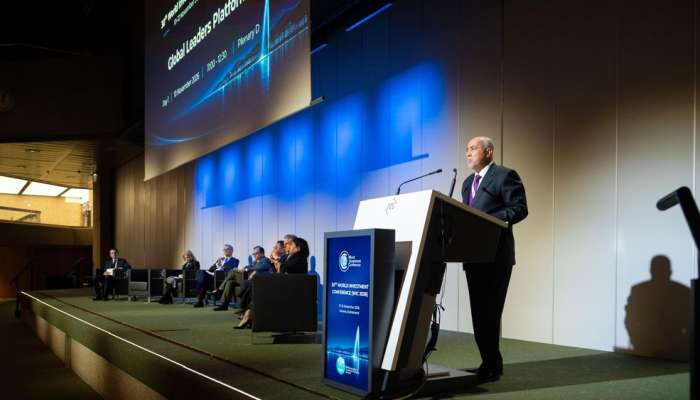
Geneva: The Public Authority for Special Economic Zones and Free Zones (OPAZ) has showcased investment opportunities in renewable energy equipment manufacturing, low-carbon steel production and fisheries and food industries at the World Investment Conference in Geneva, Switzerland.
Addressing the “Global Leaders Platform II: The New Charter for Investment and Development” session, Ahmed bin Hassan Al-Dheeb, Vice Chairman of OPAZ, highlighted opportunities for international companies to establish industrial and technological partnerships in Oman's economic and free zones.
He outlined potential projects linking industrial production with clean energy and international markets, stressing that reliable infrastructure, readily available services and clear project implementation requirements are essential to attracting investment.
Speaking at the World Free Zones Organization's “Future Business” session and before the Arab-Swiss Chamber of Commerce and Industry, Al-Dheeb said investors needed clarity on the availability of electricity and water, approval procedures and production timelines to plan their investments effectively.
He also emphasised the importance of developing local suppliers and qualifying national talent alongside investment projects, enabling Omani businesses to serve industrial requirements and graduates to acquire the technical skills needed to operate advanced manufacturing technologies.
The presentation highlighted opportunities in Duqm to manufacture wind turbines, their components and materials used in solar cell production. More than 242 square kilometres have been allocated for wind and solar energy projects.
Among the projects showcased was the Resources Wind Turbine Factory, being developed with an investment of US$200 million in partnership with Shanghai Electric Wind Power Group. The facility is expected to produce 100 turbines annually. The project also includes an agreement with the National University of Science and Technology to train more than 300 Omani graduates in turbine blade manufacturing and assembly.
OPAZ also highlighted opportunities to use green hydrogen in producing low-carbon steel and ammonia, alongside potential investments in specialised technologies, industrial equipment and supply chains.
In the fisheries sector, the Authority presented the Simak complex in Duqm, which has an annual production capacity of 100 million cans of tuna and sardines. Opportunities include expanding the local processing of Omani fish catches and increasing the participation of fishermen and small and medium enterprises in supply, manufacturing and distribution.
The presentation further highlighted Oman's strategic ports in Sohar, Salalah and Duqm, which provide transport, storage and shipping links to markets across the Gulf, India and East Africa, supporting the development of export-oriented industries.
Al-Dheeb invited international companies to visit Oman's economic and free zones and industrial cities to explore investment opportunities and potential partnerships in manufacturing, technology transfer and trade.




