Wednesday 04 / November / 2026
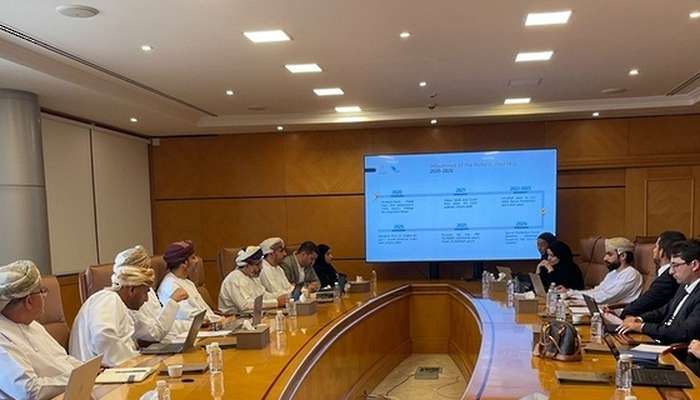
Muscat: The Ministry of Economy received today a delegation from the International Monetary Fund (IMF) to review key developments in the Sultanate of Oman's economic performance and growth prospects during the upcoming period. This comes within the framework of the periodic consultations (2026 Article IV Consultations) conducted by the IMF mission from 25 October to 8 November 2026.
The meeting addressed macroeconomic developments, including Gross Domestic Product (GDP) growth, the performance of petroleum and non-petroleum activities, inflation rates, and labor market and employment developments, alongside economic projections for the forthcoming period.
Both sides discussed the direct and indirect impacts of geopolitical developments and regional conflicts on the Omani economy, as well as their repercussions on oil and gas markets, foreign trade, supply chains, transport, freight, and insurance costs, the industrial sector, and logistical and investment activities.
In this context, the Ministry reviewed the main economic performance indicators for the first half of 2026, during which GDP at constant prices recorded a growth of 3.8 percent, supported by a 9.7 percent growth in petroleum activities, alongside a 1.8 percent growth in non-petroleum activities.
Discussions touched upon economic opportunities and challenges arising from regional dynamics, the importance of strengthening national economic resilience, supporting the competitiveness of productive and service sectors, and developing the transport and logistics ecosystem, thereby enhancing the Omani economy's capability to navigate external variables.
Furthermore, topics presented within the consultations encompassed updates on the 11th Five-Year Plan (2026–2030), its linkage to the targets of Oman Vision 2040, boosting the contribution of non-petroleum sectors, attracting investments, and raising in-country value (ICV) for the national economy.
These consultations take place within the framework of ongoing cooperation between the Sultanate of Oman and the International Monetary Fund, as well as efforts aimed at exchanging views on economic developments, policies, and reforms that support economic stability and sustainable growth.




