Sunday 13 / September / 2026
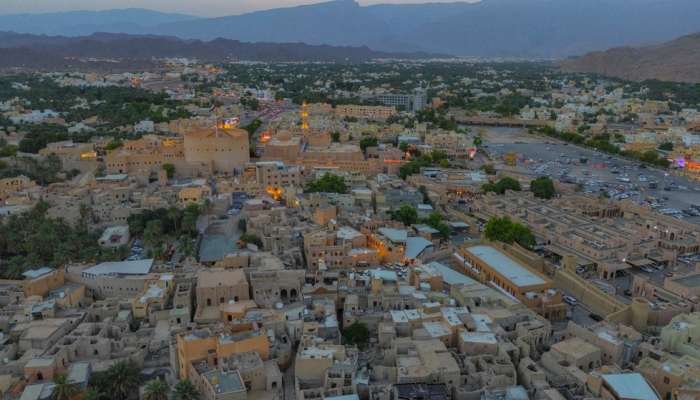
Nizwa: The Ministry of Heritage and Tourism, in cooperation with the relevant authorities, is conducting studies and rehabilitation work on a number of heritage quarters and sites of historical value in Al Dakhiliyah Governorate, in accordance with priorities that consider readiness and the anticipated economic and social impact.
Ahlam Hamad Al Qassabi, Director of the Heritage and Tourism Department in A’Dakhiliyah Governorate told Oman News Agency (ONA) that old quarter rehabilitation projects contribute to creating an attractive environment for investment by repurposing historic buildings for various economic activities, such as heritage inns, traditional cafés and restaurants, handicraft and traditional industries exhibitions, private museums, and cultural centres, as well as organising events, festivals, and heritage markets.
She added that these activities are intended to stimulate economic activity and attract visitors throughout the year. She noted that old quarters represent a civilisational, cultural and economic asset, as well as an authentic part of Omani identity.
Work in the governorate therefore focuses on rehabilitating them in a manner that combines preserving their heritage and architectural values with utilizing them as sustainable economic, tourism and cultural destinations, she pointed out.
She explained that Al Dakhiliyah Governorate encompasses more than 220 historic quarters, a number of which have witnessed the implementation of rehabilitation and development projects in recent years.
She affirmed that the department continues to implement restoration and rehabilitation projects for heritage quarters and buildings, through the restoration of sabahs (open courtyards), gates, and historic mosques, and the rehabilitation of pathways and alleys within the quarters, in a manner that preserves their authentic architectural character and enhances their readiness to receive visitors.
Among the most prominent of these projects is the restoration of Al Waljah Mosque and the sabah of Al Saybani quarter in Birkat Al Mouz, along with the preparation of the area in front of the quarter and its entrance, and paving it in a manner consistent with the urban character of the site.
Meanwhile, restoration work on the sabahs and tower of the Al Ain and Al Sawad quarters in the Wilayat of Izki has been completed.
In the Wilayat of Jabal Akhdar, the Al Aqr, Al Ain, and Al Shurayjah villages trail project is also ongoing. It links a number of the Al Aqr, Al Ain, and Al Shurayjah quarters by paving the trail with flat gravel and creating seating areas along its length, thereby enriching the visitor experience and enhancing the utilisation of the wilayat's heritage and natural assets.
Al Qassabi added that the ministry's efforts include supporting owners of heritage houses and providing the restoration materials needed to rehabilitate them and convert them into heritage inns, as well as providing technical supervision of restoration and maintenance work, thereby contributing to preserving the urban identity of the quarters and sustaining their historical and heritage value.
Within the framework of strengthening partnership with the local community, the ministry has supported community initiatives in the Wilayat of Adam to restore and maintain Al Hawashim and Bani Shiban quarters by providing essential restoration materials, including sarooj, kandhal wood, and stone.
She affirmed that the rehabilitation projects have contributed directly and indirectly to creating diverse job opportunities during the restoration and construction phases and after the operation and investment of the sites. Small and medium enterprises have also benefited from the implementation of works and services associated with the projects, and opportunities have been created for productive families and artisans to market their traditional products to visitors.
She indicated that reviving old quarters contributes to stimulating the local economy by increasing tourism traffic, raising spending rates within local communities, enhancing the value of real estate assets, and encouraging entrepreneurs to launch new projects related to tourism, culture, and heritage, which reflects positively on the income of families and individuals and supports the sustainability of development in the wilayats.
She explained that partnerships with the private sector represent a fundamental pillar in developing heritage sites, by providing the financing and the operational and marketing expertise necessary to transform them into sustainable economic projects, in addition to raising the quality of services, accelerating project implementation, and enhancing the attraction of local and international investments.
These efforts are consistent with the objectives of Oman Vision 2040 by supporting economic diversification, enhancing cultural and creative industries, developing heritage tourism, and raising the contribution of small and medium enterprises to the national economy. -