Tuesday 25 / August / 2026
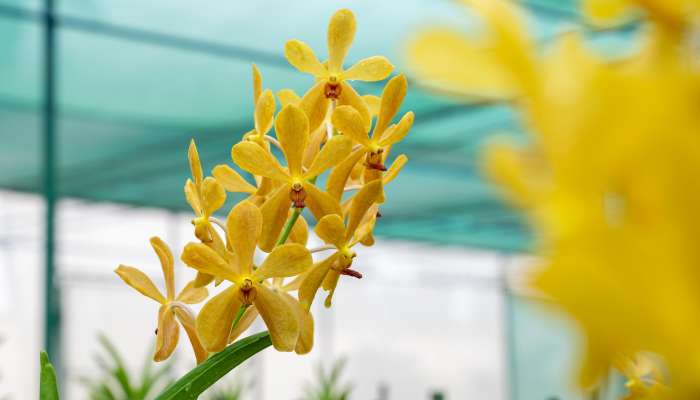
Muscat: The Royal Gardens and Farms, under the auspices of the Royal Court Affairs, have successfully propagated both local and imported orchids after years of continuous experimentation, development, and research.
The initial cultivation of orchids began in the Royal Gardens and Farms nurseries in Salalah in 1982 using imported seedlings. Subsequently, the propagation and production of orchids in various colors, shapes, and varieties commenced at the Bir Bint Ahmed and Qayrun Hayriti farms in Salalah.
The Dhofar Governorate boasts a climate ideal for orchid propagation, with temperatures and humidity levels ranging from 18 to 32 degrees Celsius and humidity levels between 60 and 85 percent.
The Royal Gardens and Farms have focused on propagating various orchid varieties, including the local variety collected from Tawi Atayr in the east and the Dhalkut Mountains in the west. To preserve, nurture, and propagate this variety, which is distinguished by its flower stalks reaching 1.5 to 2 meters in length and its smaller flowers compared to hybrid varieties, there is also another, shorter variety with larger and more vibrant flowers.
Regarding other varieties, Engineer Ibrahim bin Ahmed Qatan, Director of the Technical Support Department at the Royal Gardens and Farms in Salalah, stated that several orchid varieties have been propagated, including Dendrobium, Vanda, Aranda, and Onsidium, in addition to Cattleya and Phalaenopsis. Dendrobium is considered one of the most successful orchid varieties in the Dhofar Governorate, followed by Onsidium.
He added that orchids are propagated in several ways, including tissue culture, cuttings, offshoots, or lateral growths from the mother plant. The flower roots are also grown in growing media such as charcoal, coconut, and the bark of some trees, which helps to keep the roots clean and moist and protect them from fungal and insect infestations.