Saturday 15 / August / 2026
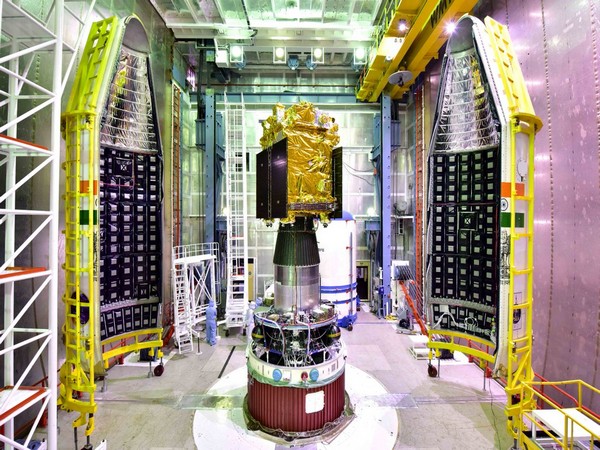
India’s Aditya-L1 solar mission has provided new evidence that could help explain one of astrophysics’ biggest mysteries: why the Sun’s outer atmosphere, the corona, is vastly hotter than its visible surface.
A study led by Prof. R. Ramesh of the Indian Institute of Astrophysics and published in The Astrophysical Journal Letters found that magnetic-field reconnection may supply about 93% of the energy needed to heat and sustain the corona, while waves generated by turbulent motions on the Sun’s surface contribute roughly 7%.
The findings are based on observations of a powerful coronal mass ejection (CME) on August 5, 2024, captured by Aditya-L1’s Visible Emission Line Coronagraph (VELC).
Scientists have long struggled to explain the so-called coronal heating problem. The Sun’s visible surface is around 5,500°C, yet the corona can reach millions of degrees and, during extreme events, tens of millions of degrees.
According to the study, the Sun’s constantly changing magnetic fields play a crucial role. During eruptions, tangled magnetic-field lines can snap and release enormous amounts of energy. They subsequently reconnect and reconfigure, restoring energy to the corona.
Researchers observed that following the August 2024 CME, the magnetic structures returned toward their previous configuration within about 10 hours, providing evidence that magnetic reconnection rapidly replenishes energy lost during eruptions.
The findings suggest that waves generated by the Sun’s turbulent surface motions do transport energy outward, but their contribution alone is insufficient to explain the corona’s extreme temperature. Magnetic-field restructuring appears to be the dominant mechanism.
The results from Aditya-L1 could provide an important benchmark for future research into how the Sun generates, transports and replenishes energy in its atmosphere—and improve understanding of solar flares and CMEs that can trigger geomagnetic storms and disrupt satellites, communications and power infrastructure on Earth.