Monday 10 / August / 2026
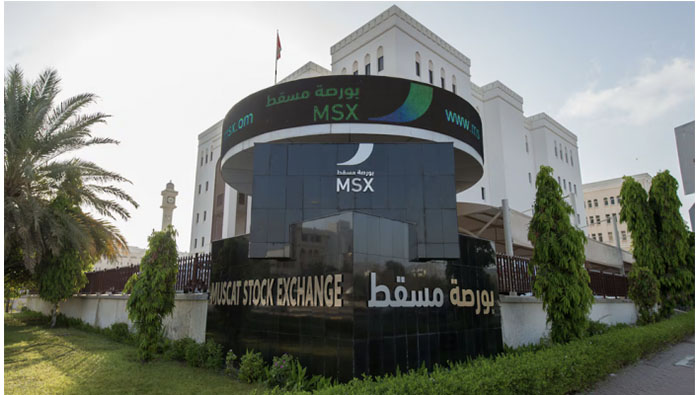
Muscat: Muscat Stock Exchange (MSX) is higher by 24% year-to-date and is comfortably the best performer as compared to other Gulf Cooperation Council (GCC) markets, according to an industry watcher.
“Every other major GCC index sits in negative territory for 2026: Saudi Arabia's Tadawul at 0.9%, Qatar's QE 20 down 7.8%, Bahrain down 5.3%, and Dubai's DFM down 4.2%,” said Shahneel Syed, Chief Operating and Transformation Officer, Graystone Capital. “This is a continuation, not a one-off, MSX also led the region for the whole of 2025, up 28% against Kuwait's 21%, Dubai's 17.2% and Saudi's 12.8% decline, the only GCC market to close that year lower,” he added.
What stands out beyond the headline return is how MSX has handled the recent stress, he pointed out that “During the sharpest phase of the regional conflict, the MSX 30 fell around 15% peak-to-trough, compared with a 22% drawdown on Dubai's DFM index over the same period, according to market commentary accompanying the Omifco listing.” And the market has done this without becoming expensive: MSX trades at a price-to-earnings ratio of roughly 10.7x, the second-lowest in the GCC after Dubai's 9.9x, versus Abu Dhabi near 21x, Kuwait near 19x and Saudi near 18x.
Strongest returns, smallest drawdown, and still one of the cheapest markets in the region, that combination is unusual, and it's a big part of why regional and international allocators keep circling back to Muscat, he said.
New IPOs expected
Elaborating about the new initial public offerings (IPOs) expected in the coming months, Shahneel Syed said, Oman India Fertiliser Company's (Omifco) 8 July listing was the story of the summer for MSX, and the numbers behind it are worth dwelling on. “The offering — 25% of the company's issued share capital, drew roughly OMR4.7 billion ($12.2 billion) in investor orders against a raise of about OMR261 million, making it 18 times oversubscribed,” he said.
Shares opened 18.6% above the 156 baisa offer price and touched an intraday high of 192 baisa before settling around 190 baisa, even as most Gulf indices were sliding on the same day amid renewed US-Iran tensions.
That divergence mattered, Shahneel Syed said, adding that “Sico Bank has since noted that Omifco is comparatively insulated from Strait of Hormuz-related disruption relative to other GCC-listed fertiliser producers, given its long-term gas supply contracts with the Integrated Gas Company running a decade out, and projects a minimum 2026 dividend yield of 6.4%.”
Beyond Omifco, Minerals Development Oman (MDO) remains the name most investors are watching next. MDO, now majority-owned by the Oman Investment Authority (OIA) (76.8%) alongside the Oman National Investment Company, has been developing the $270 million Mazoon Copper project in Yanqul, which reached financial close in January 2026 and is targeting production start later this year. A public listing has been discussed for years without a firm date materialising, but the maturing asset base gives the story more substance than it's had before.
More broadly, the OIA has signalled intent to widen its divestment pipeline into tourism and ICT names, building on the roughly $4 billion raised across six state-linked IPOs since 2023.
Speaking about where the MSX index will be moving in the near future, Shahneel Syed said, “Near-term, the index will keep taking its cues from the region rather than from Oman itself. The MSX 30 has spent the past several weeks oscillating in a roughly 7,200 to 7,500-point band, most recently closing at 7,349 points, up 0.73% on the day, with a jump of nearly 62% in trading value versus the prior session, a sign that liquidity is holding up well even in a choppy market.”
“If the current phase of the US-Iran standoff eases meaningfully, I would expect the index to move back toward its earlier highs relatively quickly, since the underlying supports, corporate earnings, liquidity, and the IPO pipeline — remain intact,” he added.
The case for that view is building in the data. Kamco's Q2 2026 report shows Oman's project awards surged 341.7% year-on-year to $5.9 billion, one of the sharpest increases anywhere in the region, a genuine signal of real-economy momentum sitting underneath a consolidating index. First-half corporate results have shown broad-based profit growth that share prices haven't yet fully reflected.
“Looking toward 2027-2028, the combination of a strengthening sovereign credit profile, an IPO pipeline extending into new sectors, and continued work toward MSCI and FTSE Russell emerging-market reclassification all point the same direction.”
“The variables to watch remain the path of the regional conflict, oil prices, and how well the next listings — MDO chief among them — are received,” he further added.