Sunday 09 / August / 2026
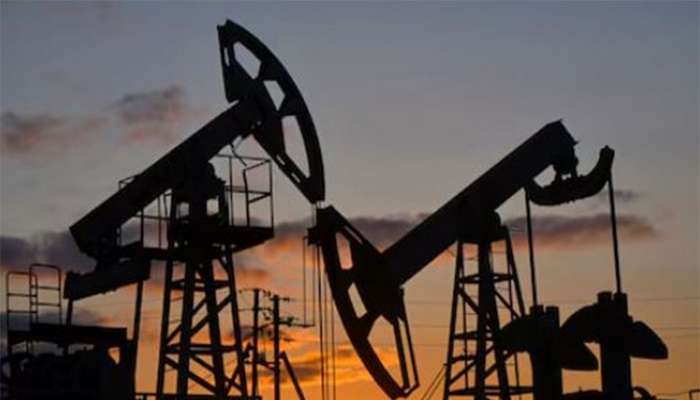
India has approved an investment programme of up to 840.84 billion rupees ($8.8 billion) to accelerate offshore oil and gas exploration over the next five years, as the country seeks to strengthen domestic energy supplies and reduce its reliance on imports.
The National Offshore Exploration Scheme will run through the end of the 2030-31 financial year and is expected to accelerate the addition of more than 600 million tonnes of discoverable oil equivalent to India’s reserves.
The programme will finance seismic surveys, data processing and interpretation, and exploration drilling in deepwater and ultra-deepwater areas. It will also support scientific drilling in frontier basins, shared offshore production and evacuation infrastructure, and the establishment of an integrated oil and gas manufacturing and services zone.
The government said the initiative is designed to attract investment across the exploration and production supply chain, create long-term business opportunities and strengthen India’s domestic technical capabilities.
India has opened most of its offshore acreage to exploration over the past decade while reforming its legal and contractual framework and expanding the National Data Repository for exploration data.
The programme comes as India continues efforts to reduce its dependence on imported energy. Domestic crude production currently meets only about 10% of the country’s consumption, making India the world’s third-largest oil importer and second-largest buyer of LPG. The government has also diversified its crude procurement sources, increasing the number of supplier countries from 27 to 41.
Prime Minister Narendra Modi first announced the offshore exploration mission in August last year.
Separately, the cabinet approved a $530 million programme for floating solar photovoltaic projects with energy storage. The initiative targets 102 GW of floating solar capacity on reservoirs, canals and industrial water bodies over five years and is expected to prevent around 10 million tonnes of carbon dioxide emissions.