Tuesday 28 / July / 2026
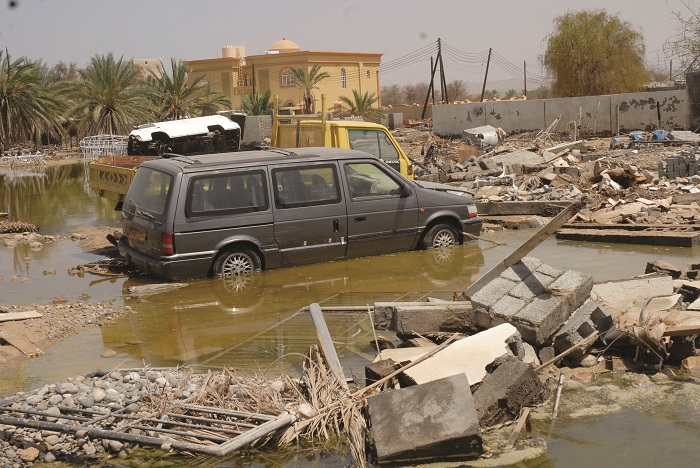
MUSCAT: Oman is stepping up efforts to strengthen its resilience against floods by embracing artificial intelligence (AI), satellite imagery and drone technology to improve risk assessment, disaster preparedness and insurance services.
The move comes as the Financial Services Authority (FSA) convened a workshop on “Flood Risk Analysis Using Satellite and Drone Technologies”, bringing together representatives from the Civil Defence and Ambulance Authority, insurance companies, insurance brokers and technology experts to explore how emerging technologies can enhance the country’s ability to predict, assess and respond to natural disasters.
The workshop was inaugurated by Muneer Al Muneeri, Deputy President for Operations at Oman Investment Authority (OIA). The event focused on the latest technological innovations that can support flood risk analysis, particularly through the use of satellite imagery, drones, artificial intelligence and remote sensing.
Participants discussed how these tools can improve data collection, damage assessment, insurance underwriting and claims settlement, helping to make the insurance sector more efficient and better prepared for climate-related risks.
Speaking at the workshop, Ahmed Ali Al Maamari, Deputy CEO of the Financial Services Authority, said rapid advances in AI, data analytics and remote sensing technologies are fundamentally transforming the way risks are managed.
He noted that the insurance industry is increasingly relying on accurate data and predictive analysis to make faster and more informed decisions, enabling the development of better insurance products and improving customer services.
Al Maamari said accelerating climate change has reinforced the need to shift from responding to disasters after they occur to anticipating risks in advance and taking preventive measures to reduce their impact.
“Adopting modern technologies has become a strategic necessity to enhance institutional readiness and strengthen the efficiency of risk management systems,” he said.
He added that the exceptional weather events experienced by Oman in recent years have underscored the importance of developing more accurate methods for assessing natural hazards and using advanced technologies to gather and analyse reliable data.
According to Al Maamari, these technologies can significantly improve the speed and accuracy of damage assessments while supporting faster and more informed decision-making.
Beyond the insurance sector, he said satellite and drone technologies also have wider applications in supporting the operations of the Civil Defence and Ambulance Authority, emergency response planning, urban development and infrastructure protection, helping government agencies work together more effectively during extreme weather events.
The workshop featured technical presentations, research papers and an interactive simulation demonstrating practical applications of satellite and drone technologies in flood risk analysis. Experts showcased how these innovations can enhance risk modelling and improve operational efficiency within the insurance industry.
Participants concluded that continued investment in advanced technologies will be essential to strengthening Oman’s insurance sector and improving national preparedness for natural disasters.
They also stressed the importance of greater collaboration between regulators, insurance companies and technology providers to build a smarter and more resilient risk management ecosystem.
The workshop highlighted that innovation and digital transformation will play a central role in the future of Oman’s insurance sector, supporting the objectives of Oman Vision 2040 by promoting a diversified, knowledge-based economy driven by technology and innovation.