Sunday 12 / July / 2026
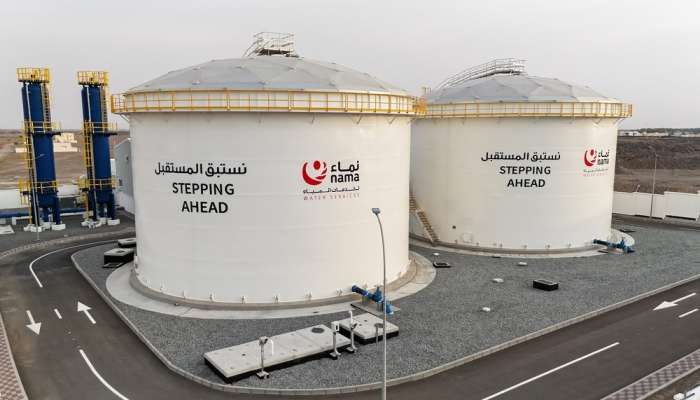
Ibra: Nama Water Services has completed the implementation of a package of major water projects in the North Al Sharqiyah Governorate, at a cost exceeding OMR120 million.
This comes within the framework of national efforts to ensure the sustainability of water resources and achieve water security.
The package included main transmission projects, distribution networks, and small developmental projects targeting villages and population centers.
The company is also implementing a number of water supply sustainability projects with investments exceeding OMR43 million.
This comes within a sustainable developmental vision that aligns with the requirements of urban and population growth witnessed by the governorate, as well as the continuous development of basic infrastructure, thereby supporting the targets of sustainability and water security in the Sultanate of Oman.
The company clarified that the project to enhance the water transmission system between the South Al Sharqiyah and North Al Sharqiyah governorates is considered one of the national strategic projects that has been completely implemented and operated, at an implementation cost of OMR120 million.
The project consists of 17 reservoirs with a total storage capacity of 265,000 cubic metres distributed across strategic points in the wilayats of Al Qabil, Ibra, and Al Mudhaibi.
It also includes 312 kilometres of main transmission lines with diameters ranging from 600 to 1,300 mm, in addition to four main pumping stations to ensure pressure stability.
The project aims to connect the water transmission systems between the South Al Sharqiyah, North Al Sharqiyah, and Al Dakhiliyah governorates.
It seeks to establish a unified and flexible system capable of meeting the increasing demand up to the year 2050 and enhancing reliability in emergency situations.
The company affirmed that the overall objective of these projects is represented in achieving three main pillars: most notably securing a sustainable and safe water supply for all wilayats of the North Al Sharqiyah Governorate, raising operational efficiency and reducing water loss, in addition to expanding the service to remote population centers within the principle of fairness in service distribution.
Regarding water network construction projects, Nama Water Services implemented a number of projects aimed at expanding coverage to address population density and geographical vastness.
The water connection projects in the Wilayat of Al Mudhaibi stand out as the first project in the first phase. Its implementation and operation were completed in the areas of the Wilayat of Al Mudhaibi's centre, the villages of Al Rawdha, Al Akhdhar, Lazaq, Khadhra Bani Difa, and the Niyabat of Samad Al Shaan, comprising 13,836 connections.
Meanwhile, the second phase of the second project, which is currently underway, has reached a completion rate of 35 percent with 4,065 connections at an investment cost exceeding OMR15 million.
The project covers a group of villages, including Khadhra Bani Difa, Al Khashbah, Al Sudairah, Al Mintarib, Al Mutaili, Al Washahi, Al Wafi, Al Khurays, Al Tasawir, and Al Majazah.
It is being executed with 40 kilometres of transmission lines and 217 kilometres of distribution networks, alongside the construction of a pumping station and an elevated reservoir, within an integrated system aimed at raising distribution efficiency and enhancing supply stability.
The third project was located in the villages of Wadi Andam in the Wilayat of Al Mudhaibi. It has been completed and operated, serving 10 villages with 1,229 connections at a total cost of OMR3,668,000.
Nama Water Services has also commenced the implementation of the Al Jarda line project in the Wilayat of Al Mudhaibi and Mullah in the Wilayat of Dima W'attayeen at a cost exceeding OMR28 million, forming an integrated system for water transmission and distribution.
The project includes laying networks and establishing an integrated operational system comprising main and booster pumping stations, reservoirs with various capacities up to 4,000 cubic metres, and tanker filling stations, thereby enhancing the system's flexibility and capacity to respond to demand.
The project encompasses the execution of approximately 77.8 kilometres of main transmission lines and nearly 433 kilometres of distribution networks, with diameters ranging from 110 to 600 mm.
It also features one main pumping station and eight reservoirs with a capacity of 34,000 cubic metres, providing more than 6,200 connections serving existing and future households.
Nama Water Services focused on implementing four packages of small developmental projects to ensure the delivery of potable water services to remote villages and communities in several wilayats of the North Al Sharqiyah Governorate.
The most prominent of these is the first package project in the Wilayat of Ibra, which was completed and operated in the villages of Al Mutaridh and Al Qa'a with 100 connections at a cost of OMR168,570.
The second package project in the Wilayat of Ibra has also been completed, covering seven villages with 247 connections. Furthermore, the third package is currently in the awarding phase and its implementation will commence soon; it includes the wilayats of Ibra, Al Qabil, Al Mudhaibi, and Wadi Bani Khalid, with a total of more than 500 new connections.
The fourth package is in the tender document preparation phase and covers a number of villages in the wilayats of Ibra, Al Qabil, and Al Mudhaibi.
Nama Water Services is focusing on implementing an ambitious plan to rehabilitate networks that recorded high numbers of leaks and to reduce water loss during 2025–2026 in the North Al Sharqiyah Governorate, within the framework of improving the efficiency of existing networks.
The company adopted a plan to rehabilitate networks by upgrading 17,000 metres of networks during the year 2025, and rehabilitating an additional 6,500 metres during the current year 2026.
This aims to reduce the water loss rate from 37 percent in 2024 to 20 percent in 2025, and subsequently to 17 percent in 2026.