Tuesday 16 / June / 2026
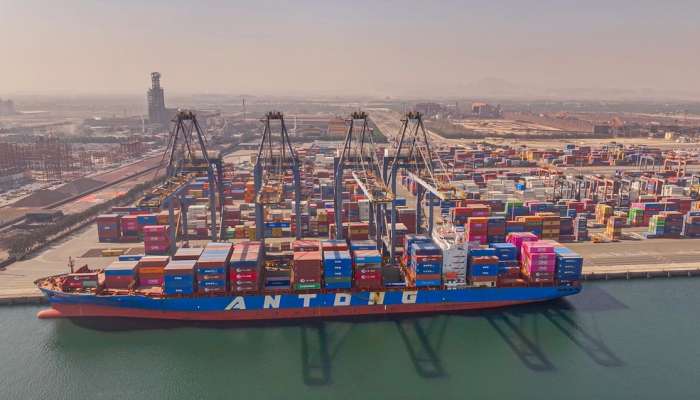
Muscat: Supported by the location of its major ports outside the Strait of Hormuz bottleneck and continued prudent policies Oman’s economy has thus far shown resilience amid the war in the Middle East.
Favourable oil prices and continued commitment to fiscal discipline are expected to generate sizable fiscal and external surpluses, a team from the International Monetary Fund (IMF), led by Abdullah AlHassan, said.
The IMF team was in Muscat during June 7-15, 2026, to discuss economic and financial developments, the outlook, and the country’s policy priorities.
At the conclusion of the mission, AlHassan said, “Oman's oil and natural gas infrastructure has remained largely unaffected, enabling Oman to increase oil production and exports amid regional supply disruptions.”
The banking sector remains well-capitalised and liquid, benefiting from strong buffers heading into the regional conflict and prudent oversight by the Central Bank of Oman (CBO), AlHassan added.
He further elaborated that “the strong growth momentum continues. Real gross domestic product (GDP) growth accelerated in 2025 to 2.4 percent (from 1.6 percent in 2024), supported by both the hydrocarbon and non-hydrocarbon activities. Growth is projected at around 3.7 percent in 2026, driven by increased oil production, and 3 percent in 2027.”
Non-hydrocarbon growth is expected to ease to 2.5 percent in 2026, reflecting the impact of the regional conflict on tourism and construction, before accelerating to 3.2 percent in 2027 on the back of a broad-based recovery. Average inflation remained contained at one percent in 2025, before rising to 2.8 percent (year-on-year) during January-May 2026 driven by higher food and transportation prices.
AlHassan further pointed out that “fiscal and external positions are set to strengthen, supported by higher oil revenues and continued fiscal discipline. After narrowing to 0.6 percent of GDP in 2025, reflecting lower oil prices and increased capital spending, the fiscal surplus is projected to widen to 4.5 percent of GDP in 2026 and 4.2 percent in 2027. Central government debt continues its downward trajectory, reaching 34.7 percent of GDP at end-2025.”
“The current account balance posted a deficit of 1.9 percent of GDP in 2025 but is expected to shift to a sizable surplus in 2026 and 2027, at about 3 percent of GDP, shored up by stronger hydrocarbon revenues and robust growth in non-hydrocarbon exports.”
The banking sector remains resilient, underpinned by comfortable capital and liquidity ratios, strong asset quality, and profitability.
AlHassan said, “Going forward, sustaining momentum in implementing policy reforms will be key to accelerating economic transformation, while entrenching fiscal and external sustainability.”
He concluded by saying, “The IMF team would like to thank the Omani authorities and other counterparts for the open and productive discussions and their warm hospitality.”