Friday 15 / May / 2026
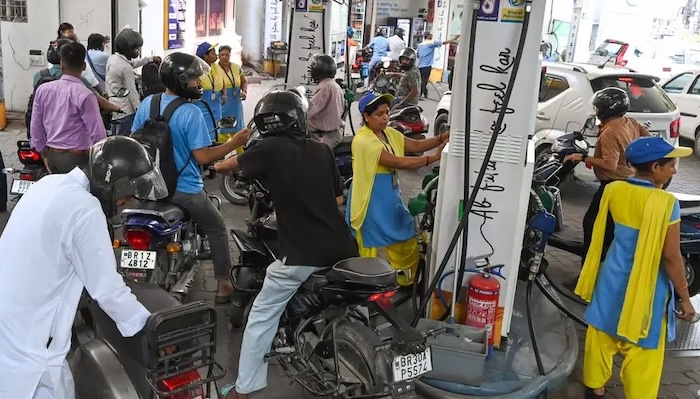
India's state-run fuel retailers raised the prices of petrol and diesel on Friday — the first time since the war in Iran began — as they look to recoup some of the losses incurred over rising global crude prices.
Indian Oil Corporation, Hindustan Petroleum Corporation (HPCL) and Bharat Petroleum Corporation (BPCL) raised fuel prices by Rs 3 per litre ($0.03, €0.027), or more than 3%. With this, diesel will cost Rs 90.67 a litre and petrol will cost Rs 97.77 a litre. Fuel prices in India differ in cities and states due to state-level taxes, transportation costs and dealer commissions.
Global oil prices spiked to over $120 a barrel amid the US-Israel war with Iran before pulling back to about $100-$105.
In April, Indian oil ministry official Sujata Sharma said that higher oil prices caused Indian retailers to lose about Rs 100 per litre ($1.04, €0.9) on diesel and about Rs 20 a litre ($0.21, €0.18) on petrol.
While BPCL confirmed the price increase, HPCL and Indian Oil did not immediately respond to requests for comments.
Indian Prime Minister Narendra Modi is currently on a state visit to the United Arab Emirates. On Friday, the two nations have signed a pact on strategic defence cooperation, petroleum reserves and supply of liquefied petroleum gas.
The age of austerity
This is the first time in four years that India's state retailers have increased petrol prices.
While Modi's government had initially assured masses that petrol prices would not be increased, experts had warned that hikes would be inevitable if the Middle East crisis persisted.
The steeper fuel prices come days after Modi called on Indians to make certain sacrifices to shield India's economy from the fallout of the Iran conflict in the Middle East.
Speaking at a rally this week, he urged Indians to cut fuel consumption, work from home, postpone foreign travel, avoid unnecessary imports and delay gold purchases. The message was framed as a patriotic responsibility during a period of global instability.
"The West Asia crisis is one of the worst in the decade; just as we overcame the COVID-19 pandemic, we will also come out of this," Modi said.
Since making this appeal, the prime minister slashed his own convoy to just two cars. Meanwhile, the national capital's chief minister announced several supporting measures for 90 days. This includes two days of work from home, per week, for government officials, a "No Vehicle Day," and directions for ministers to use public transport.
Some states also sent notices to government departments, instructing them to restrict travel, avoid physical events, and hold meetings online.
India is currently facing a significant shortage of US dollars, which it uses to pay for imports. Oil and gold are India's largest imports.
Just the beginning?
Higher petrol prices will likely lead to rising inflation.
Madhavi Arora, chief economist at Emkay Global Financial Services, said the direct impact of this hike will be a muted 15 basis points on consumer price inflation.
However, the indirect impact will be larger, she added.
"The hikes are not enough but could be the start of multiple staggered hikes," she said.
India's retail inflation quickened to 3.48% in April, driven by dearer food prices, government data showed on Tuesday, with the outlook clouded by risks from rising energy costs tied to the Middle East conflict.
"India's petrol demand growth will be impacted, although the price hike is modest, but other fuel conservation steps such as work from home will dent demand growth," said Prashant Vashisth, vice president and co-head of corporate ratings at Moody's Indian arm, ICRA.




