Sunday 03 / May / 2026
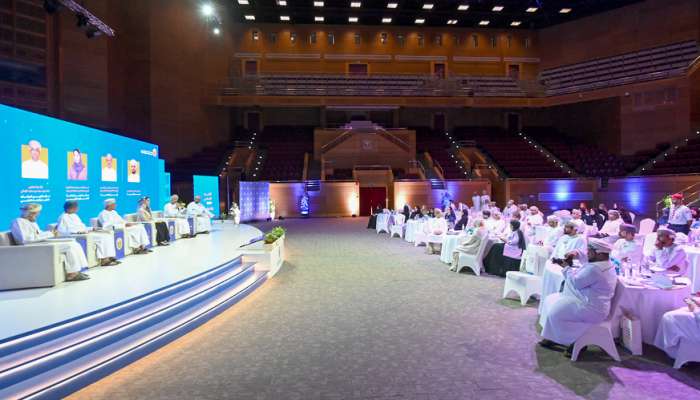
Muscat: Sultan Qaboos University (SQU) is implementing its strategic and operational plans aligned with Oman Vision 2040, having achieved progress on 13 of its indicators during 2025, with four additional indicators approaching their target levels.
This was announced during the SQU's annual media meeting held today to review its most notable achievements, performance indicators, and future plans, in keeping with its vision of becoming "a distinguished university with global impact and standing."
HH Sayyid Dr. Fahd bin Al Julanda Al Said, SQU Vice Chancellor stated that the qualitative achievements realised by Sultan Qaboos University come as a realisation of the Royal patronage and continuous support of His Majesty Sultan Haitham bin Tarik, for the education, scientific research, and innovation sectors, serving as a constant impetus to continue the march of excellence and enhance the university's role in serving the nation. The university is moving forward in implementing its strategic and operational plans aligned with the targets of Oman Vision 2040.
HH Sayyid Dr. Fahd added that the university achieved progress on 13 vision indicators during 2025, most notably attaining 334th position globally and eighth in the Arab world in the QS World University Rankings, a clear reflection of the university's growing presence on the international stage, alongside the expansion of accreditation of its academic programmes by prestigious international institutions, thereby enhancing the quality of its outputs and keeping pace with international best practices.
HH Sayyid Dr. Fahd noted that the university maintains active strategic and research partnerships with state institutions in both the government and private sectors, providing scientific consultations and applied solutions to various challenges, serving as a national centre of expertise that contributes to supporting comprehensive development pathways in the Sultanate of Oman.
The SQU Vice Chancellor presented during the meeting the university's extended strategy spanning from 2016 to 2040, which is founded on excellence in education and learning, the advancement of scientific research and innovation, entrepreneurship, alongside the consolidation of a stimulating academic environment based on scientific analysis and creative thinking.
This strategy is built upon a value system encompassing excellence, integrity, responsibility and creativity and innovation, affirming the university's role in producing, developing and disseminating knowledge and engaging with society locally, regionally and internationally.
The Third Executive Plan (2026–2030) serves as a compass for decisions and projects within the university, encompassing a number of strategic initiatives, most notably the strengthening of the education and learning system, the transition to the entrepreneurial university model, the advancement of scientific research, digital transformation, human resource development, alongside the improvement of infrastructure and the enhancement of the university's position in global rankings.
HH Sayyid Dr. Fahd bin Al Julanda Al Said, SQU Vice Chancellor, noted that the university achieved positive results in its strategic performance indicators for 2025 within the framework of realising the targets of Oman Vision 2040. The performance dashboard included 18 indicators, of which 13 were fully achieved, four are approaching their targets, and one indicator has yet to be met.
He affirmed that these results reflect notable progress across various areas of institutional performance. The rate of labour market satisfaction with the university's graduates reached 85 percent, while the proportion of accredited undergraduate academic programmes stood at 70 percent.
In the field of scientific research, the university recorded the publication of 1,851 research papers in peer-reviewed journals, alongside an improvement in its global ranking to 334th position according to the QS World University Rankings.
On the subject of resources, HH Sayyid Dr. Fahd stated that the university generated revenues exceeding RO 4.5 million, with the private sector contributing 20 percent to the funding of scientific research.
He mentioned that in the area of supporting innovation and entrepreneurship, the university succeeded in translating its research outputs into tangible economic value by establishing seven start-up companies, in addition to registering 14 patents, thereby reflecting the growing effectiveness of the innovation and entrepreneurship ecosystem.
HH Sayyid Dr. Fahd emphasised the university's pivotal role in building the Omani human being, with a total of 74,005 graduates since its establishment, of whom 66,526 are undergraduate degree holders and 7,479 hold postgraduate degrees.
He noted that with regard to admissions for the 2025–2026 academic year, the SQU welcomed 3,133 male and female students, including 80 students with visual or physical disabilities, in addition to 957 students enrolled in postgraduate programmes, among whom 113 are international students. This reflects the university's direction towards enhancing its academic diversity and international openness.
In the field of international cooperation, HH Sayyid Dr. Fahd noted that the number of active cooperation programmes and agreements currently in effect has reached 83, while the total number of cooperation programmes and agreements signed during 2024 and 2025 stands at 51.
He explained that the university currently offers 70 major specialisations at the undergraduate level, reflecting a diversity of knowledge that responds to the requirements of national development and global transformations.
He affirmed that the university has been keen to introduce modern specialisations that keep pace with the demands of the digital economy and the future labour market, most notably artificial intelligence, data science, digital business and economics, and veterinary medicine — a step that enhances the readiness of graduates to navigate the changes of the era.
Regarding postgraduate studies, HH Sayyid Dr. Fahd stated that the programmes have witnessed notable expansion, with the total number reaching 123 programmes, distributed across 47 doctoral programmes and 73 master's programmes, in addition to postgraduate diplomas. Specialised programmes have been introduced to meet the needs of vital sectors, such as operations and supply chain management, economics, finance, digital marketing, and genetic counselling, thereby affirming the university's role as a national institution for the production of advanced knowledge.
He also addressed a number of distinctive academic initiatives, including the launch of the "Afaq" programme, which aims to attract international and Omani students to study under a fee-based system, as part of efforts to enhance the university's international presence and improve its global ranking.
He noted that the university continues to activate student exchange programmes, with 478 male and female students participating during 2024 and 2025 in international academic experiences across several countries, including Germany, France, Russia, China, Japan and Türkiye, contributing to broadening students' horizons and enhancing their global expertise.
Reaffirming the university's pivotal role in aligning scientific research outputs with national development needs, thereby strengthening its contribution to building a knowledge-based economy, HH Sayyid Dr. Fahd indicated that the number of scientific papers published during 2024–2025 reached approximately 3,390 in peer-reviewed journals, alongside 488 scientific papers presented at specialised conferences, reflecting a wide and growing research activity in the field of scientific production.
He further stated that, as part of directing scientific research towards addressing real-world challenges and providing sustainable applied solutions, the university delivered 36 research consultations to a number of government entities and implemented 22 directed strategic projects aimed at tackling national challenges. It also succeeded in attracting government funding exceeding OMR2.1 million, thereby enhancing its standing as an active knowledge driver and a key partner in supporting comprehensive development pathways.
In the private sector, the university provided 101 scientific research consultations to support decision-makers in private sector institutions, with total funding amounting to OMR1,792,944.
HH Sayyid Dr. Fahd also noted that in the field of knowledge resources, the number of visitors to the university's libraries reached 1,417,075, while the number of electronic and printed university theses totalled 4,441,426.
Regarding community partnerships and training initiatives, HH Sayyid Dr. Fahd, explained that the university has continued its societal role by implementing 140 continuing education programmes during 2024 and 2025, benefiting more than 12,000 participants, alongside over 100 community service programmes, 430 training programmes, and 50 awareness programmes.
The number of active local and international cooperation agreements reached 83, reflecting the SQU's approach to expanding its network of institutional partnerships.
He added that within the framework of its commitment to sustainability, the university achieved tangible results in energy efficiency, reducing its energy consumption by 14.45 percent, realising annual savings estimated at approximately OMR611,000 — a step that reflects SQU’s adoption of environmentally responsible practices.
HH Sayyid Dr. Fahd noted that in the area of digital transformation, the university has continued to develop its technical infrastructure through the launch of a number of smart systems and platforms that contribute to raising the efficiency of institutional performance, most notably the student data system, the scientific research management system, the digital repository supported by business intelligence dashboards, alongside the innovation management platform and the scientific journal management platform, thereby enhancing data integration and supporting evidence-based and knowledge-driven decision-making.
HH Sayyid Dr. Fahd affirmed that the university continues to prioritise the development of human capital, with a total of 3,033 employees, the majority of whom are Omani nationals, reflected in a high Omanisation rate of 97 percent in administrative and technical positions. He also explained that the university recruited 173 permanent employees during 2024 and 2025, in addition to a number of temporary positions such as research assistants, collaborators, and visiting professors, alongside scholarship and qualification programmes that involved dozens of employees, as part of efforts to strengthen national competencies.
Regarding construction projects on the university campus, HH Sayyid Dr. Fahd outlined a portfolio of projects that reflect the university's direction towards developing infrastructure and enhancing the educational environment.
Completed projects for 2025 included the equipping of active learning classrooms in six colleges, the establishment of an active learning laboratory equipped with 33 three-dimensional computers, a food innovation laboratory, the rehabilitation of the animal laboratory, in addition to the development of meeting and study rooms in the main library, the upgrading of sports facilities, and the creation of business incubators.
HH Sayyid Dr. Fahd then reviewed ongoing projects, which include the new College of Law building, the ground station for receiving satellite images, new laboratories and facilities for the College of Engineering, alongside the expansion of the College of Nursing, the rehabilitation of facilities in the female student residential complexes, and the construction of a new office building.
He added that in the area of future projects, the university is working on the implementation of a number of distinctive initiatives, most notably a male student residential city, a new female student residence, an emerging technologies unit, a research centres complex, a veterinary clinic, new facilities for the Earthquake Monitoring Centre, alongside the expansion of the College of Arts and the College of Economics, the further adaptation of the university campus for people with disabilities, and the continued rehabilitation of a number of facilities to contribute to improving the student environment and enhancing the quality of university life.
HH Sayyid Dr. Fahd bin Al Julanda Al Said, SQU Vice Chancellor, affirmed the university's diligent pursuit of strengthening its position as a leading educational and research institution through investment in human capital, knowledge, and innovation, and through the integration of its efforts with various sectors, thereby contributing to the achievement of Oman Vision 2040 goals and enhancing the university's presence on the map of world universities.
He noted that the goal of the educational process is to enable students to study what aligns with their inclinations and passions, while equipping them with broad skills that open multiple professional horizons, whether within or beyond their chosen specialisations. He explained that as a government national institution, the university bears the responsibility of preserving the humanities, such as history, the Arabic language, and Islamic education, as fundamental pillars of cultural and intellectual identity. These disciplines cannot be discarded on the grounds of limited demand, as relying on the future recruitment of external cadres in this field is not a sustainable option.
HH Sayyid Dr. Fahd concluded that the handling of academic specialisations should not be based on a reductive logic or a binary of "high demand or cancellation." Rather, it must be governed by an integrated system of governance and mechanisms that balance labour market needs, national priorities and the requirements of academic sustainability.
For her part, HH Sayyeda Dr. Muna Fahd Al Said, Assistant Vice-Chancellor for International Cooperation at Sultan Qaboos University, indicated that the activation of partnerships and cooperation at the local, regional, and international levels is a strategic direction adopted by the SQU within its plan for the period 2016 to 2040.
In this context, the years 2024 and 2025 witnessed the signing of 51 cooperation programmes and initiatives, reflecting the university's commitment to expanding its horizons and enhancing its impact.
HH Sayyeda Dr. Muna stated that among the most prominent of these partnerships is the collaboration with Sohar Port in the areas of student exchange, skills development, and support for scientific research. Academic partnerships have also been established with a number of regional universities, alongside contributions to the development of distinctive programmes.
She explained that at the local level, cooperation has extended to include institutions such as the Jusoor Foundation, in addition to the implementation of distinctive initiatives such as the Centre of Excellence in Evolutionary Paediatric Medicine — a step that reflects the SQU's interest in developing advanced medical fields that serve society.
At the international level, She reported that the university has engaged in multiple collaborations covering vital areas such as earthquake monitoring in partnership with countries including Pakistan, Qatar and the United Arab Emirates, as well as academic and research partnerships in the fields of clinical medicine and nursing with prestigious universities in Canada and the United States of America, such as the University of Nebraska and others.
HH Sayyeda Dr. Muna affirmed that these partnerships represent a fundamental pillar in the university's development system, as they contribute directly to improving the quality of education, enhancing scientific research, and supporting sustainable development, alongside elevating the university's standing in global rankings and strengthening its role in serving society.