Saturday 02 / May / 2026
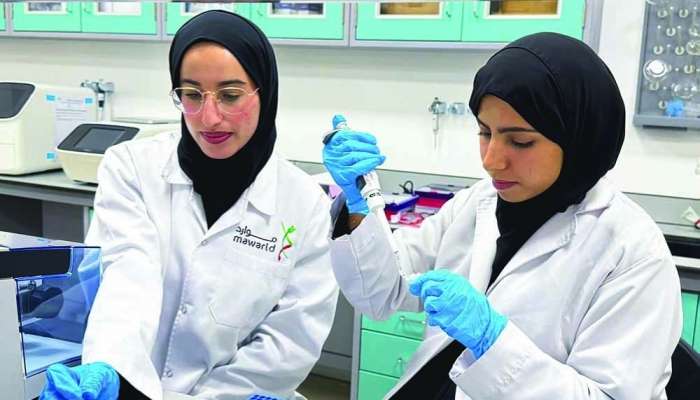
Muscat — The Ministry of Higher Education, Research and Innovation, represented by the Oman Animal and Plant Genetic Resources Center (Mawrid), continues its scientific efforts to collect, preserve, and study biodiversity across the Sultanate of Oman through an advanced national framework aimed at supporting conservation, innovation, and sustainable use of biological resources.
These initiatives aim to strengthen Oman’s capacity to address environmental challenges such as climate change, pollution, and increasing human pressure on ecosystems, while enhancing the role of scientific research in developing innovative solutions for sustainable biodiversity management.
The work also forms the basis for a future national gene bank project designed to preserve Oman’s genetic resources for future generations and enable their use in research, biotechnology, and bio-based industries.
Asila bint Suleiman Al Naabi, a genetic resources specialist at Mawrid, said the centre houses extensive scientific collections covering terrestrial, marine, plant, and microbial life. Thousands of samples have been collected from diverse ecosystems across Oman, reflecting the country’s rich biodiversity.
She noted that the centre has preserved around 1,500 cryopreserved semen samples from purebred Arabian horses, along with 100 DNA samples from horses and nearly 1,000 frozen semen samples from local cattle, supporting livestock genetic conservation and breeding programs.
The centre has also documented around 400 samples of 18 wild animal species, including the Arabian oryx, Arabian gazelle, Nubian ibex, and Arabian lynx. In addition, insect and earthworm samples have been preserved due to their ecological importance in maintaining soil health and environmental balance.
In marine biodiversity, Mawrid maintains genetic and tissue samples from 68 fish species, 20 mollusk species, 20 seaweed species, as well as coral reef, sponge, echinoderm, and crustacean samples, strengthening scientific documentation of Oman’s marine ecosystems.
In microbiology, the center holds collections of fungi, bacteria, and macrofungi, some of which have contributed to the identification of species new to science and others recorded for the first time in Oman and the Arabian Peninsula.
On the plant side, more than 350 seed collections have been preserved, including strategic crops such as wheat and barley, alongside wild, medicinal, aromatic, and endangered plant species.
Al Naabi emphasized that Oman’s geographic diversity—including mountains, deserts, coastlines, and Dhofar’s seasonal ecosystems—supports a unique range of biodiversity, including globally significant species such as the Arabian tahr, Arabian leopard, and green turtle, whose nesting sites along Oman’s coasts are internationally important.
She highlighted key plant species such as the frankincense tree (Boswellia sacra), Moringa peregrina, and Dracaena serrulata, noting their ecological, medicinal, and economic value.
The centre has also introduced a mobile research laboratory equipped with advanced tools to support fieldwork across Oman, enabling on-site collection, analysis, and processing of biological samples, improving research efficiency and sample preservation.
Dr. Mohammed bin Nasser Al Yahyaei, Acting Head of Mawrid, said the center has also developed a digital platform to document and manage biodiversity data, including genetic, taxonomic, and environmental information, facilitating access for researchers and institutions.
He added that the platform is expected to evolve into a national genetic resources database linked with universities and research institutions, integrating bioinformatics tools to enhance scientific research and sustainable resource utilisation.
He stressed that genetic resource conservation is a cornerstone of Oman’s emerging bioeconomy, with potential to support pharmaceuticals, food industries, biotechnology, and sustainable agriculture, while strengthening biosecurity and food security.
These efforts are supported by national and international collaborations with institutions including Sultan Qaboos University, the University of Nizwa, Dhofar University, A’Sharqiyah University, the Royal Court Affairs, the Environment Authority, and the Ministry of Agriculture, Fisheries and Water Resources, as well as partners in the Netherlands, Sri Lanka, and Finland.
Dr. Al Yahyaei concluded that Mawrid’s work represents a strategic step toward establishing an integrated national gene bank, positioning Oman as a regional hub for biodiversity research and innovation aligned with sustainable development goals.