Saturday 11 / April / 2026
Analysts note that Islamabad's hosting of the talks underscores its strategic importance at a time of mounting Middle East tensions.
"Pakistan's diplomatic efforts have earned it credibility as a middle power who is showing agency as an active stakeholder in the future of the broader region," Farwa Aamer, Director of South Asia Initiatives at the Asia Society Policy Institute in New York, told DW.
"Being able to pull this off between two major adversaries and amid an environment of serious trust deficit is a major diplomatic win for a country that was up until last year seen at the peripheries in the international arena," Aamer said, adding that Pakistan's "relations and understanding of Iran and its grown ties with President Trump… have helped the diplomatic outreach process at this critical moment."
Talks could ‘pave way for broader agreement on de-escalation'
Israel and the US attacked Iran in late February, sparking a war that has killed thousands and devastated the global economy. Iran blocked the Strait of Hormuz, a critical energy corridor, triggering major oil and gas shortages, which led to dramatic price increases across the world.
Pakistani intervention led to the parties agreeing to a two-week truce on Tuesday night — but only after Trump had warned that a "whole civilization will die" if Iran did not cooperate.
"The Islamabad talks, I believe, could ultimately pave the way for a broader agreement on de-escalation in the coming weeks," Zahid Husain, a political analyst based in Islamabad, told DW.
Aamer, too, says the talks are vital. The fact that the two sides agreed to come together in Islamabad is a major development itself according to Aamer, but the real breakthrough hinges on what happens over the weekend.
"The talks could make or break; let's hope for the former," she said. "Pakistan's mediation role, along with that of other players like Egypt, Saudi Arabia and China, could remain important in providing a sounding board, but the two conflicting parties have all the say in determining the outcome."
Challenges ahead for US-Iran negotiations
Aamer says a lot is riding on the talks between the two parties, who will have to discuss controversial issues like the Strait of Hormuz and Israel's continued heavy shelling of Lebanon.
"If they reach some understanding, it will help stabilize the situation, but in case the talks collapse and the conflict continues, it will only further create economic and geopolitical chaos," remarked Aamer.
Analyst Husain is optimistic; he is not expecting a breakthrough, but has hope that the ceasefire could be extended.
"I [see] indications that some positive outcomes could be achieved, including the extension of the ceasefire and the possibility of additional rounds of negotiations planned for the next few weeks," he said.
Tensions running high in Islamabad
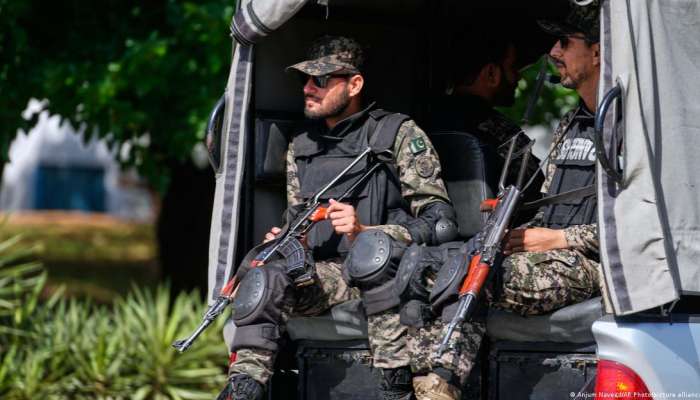
Ahead of the crucial meeting, Islamabad's usual hum feels subdued. Streetlights cast long shadows across unusually empty boulevards near the diplomatic enclave. Helicopters occasionally cut through the silence overhead.
For now, the city waits, secured, scrutinized and suspended between tension and hope.
"As long as they are talking, there is still a chance," said Ali, the doctor, glancing at another passing security convoy. "Everyone here just wants stability. We have seen enough instability already."