Sunday 25 / January / 2026
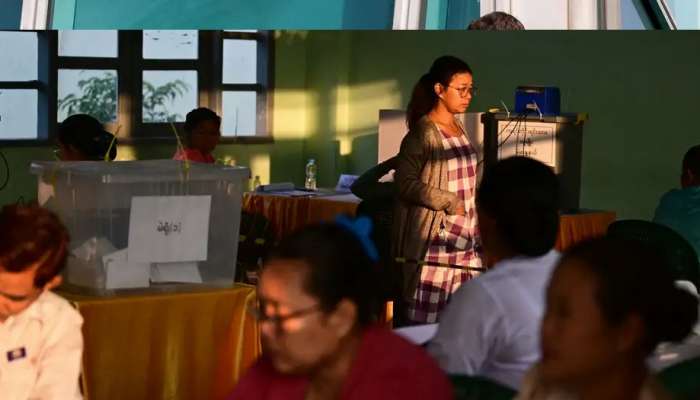
Naypyidaw: Polling stations opened across Myanmar on Sunday for the final round of voting with the military junta-backed party set to win the controversial elections by a landslide.
The previous two phases, held on December 28 and January 11, were marked by low voter turnout of 55%. That's well below the 70% turnout seen in Myanmar's 2020 and 2015 elections, before the military coup of 2021.
In the third and final phase, voters in 60 townships will make their choice.
So far, the military-backed Union Solidarity and Development Party has secured 193 out of the 209 seats in the lower house and 52 out of 78 seats in the upper house, as per the election commission.
Sunday's polls are likely to cement the party's lead.
Myanmar's military chief Min Aung Hlaing has indicated that he is considering appointing a successor to his military role and switch to being a full-time politician.
He is widely expected to assume the presidency when the new parliament meets.
On Sunday, he toured polling stations in civilian clothes. "This is the path chosen by the people," he told reporters on site. "The people from Myanmar can support whoever they want to support."
Myanmar's military chief Min Aung Hlaing visits a polling station during the third and final phase of Myanmar's general election in Mandalay
However, the military does not appear to have any real intention of stepping back on the political front.
"Regardless of how successive governments may change over time, Tatmadaw remains a steadfast institution that will continue to shoulder the responsibilities of national defense and security," Min Aung had said last week, referring to the Burmese term for the military.
War-torn Myanmar has a long history of military rule. The junta has been in power for five of the last six decades there with some years of civil reform which ended with the detention of democratic figurehead and State Councellor Aung San Suu Kyi.
Experts and foreign governments have criticized the junta for holding elections amid civil unrest.
"The junta has orchestrated the election specifically to ensure a landslide by its political proxy," UN rights expert Tom Andrews said in a statement on Friday.
Malaysia's Foreign Minister Mohamad Hasan told Malaysia's Parliament that the Association for Southeast Nations (ASEAN) had rejected an offer from Myanmar to send poll observers and would not endorse the election. Malaysia is a member of the bloc and chaired the 11-member association last year.
"Rather than resolving a crisis now in its fifth year, the vote is more likely to reinforce the military's hold on power, with little prospect of restoring domestic legitimacy or improving the country's standing with Western partners," Kaho Yu, principal Asia analyst at risk intelligence company Verisk Maplecroft told Reuters news agency.
The junta has cracked down on rebel groups opposing its rule, with strikes on civilian infrastructure such as hospitals. The tactics used by Myanmar's military have drawn criticism from human rights watchdogs such as Amnesty International.