Thursday 29 / October / 2026
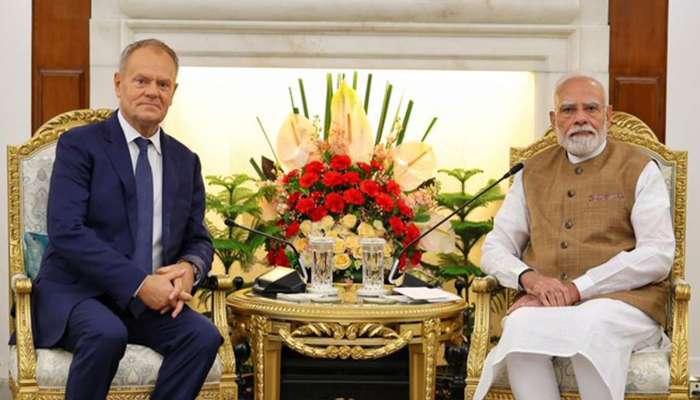
Poland is seeking to strengthen its economic and strategic partnership with India following the conclusion of the India-European Union Free Trade Agreement (FTA), with Warsaw viewing the deal as an opportunity to expand trade, investment and cooperation across Central and Eastern Europe (CEE).
Polish Prime Minister Donald Tusk visited New Delhi on October 21, 2026, leading a delegation of nearly 100 companies. The visit was the first by a Polish prime minister to India since 2010 and followed the conclusion of negotiations on the EU-India trade agreement on January 27, 2026.
Negotiations for the agreement began in 2007 but stalled in 2013 before resuming in 2022. The deal connects two economic blocs accounting for approximately a quarter of global gross domestic product (GDP).
The European Commission expects EU exports of goods to India to double by 2032, with tariffs eliminated or reduced on 96.6 per cent of goods. The agreement also envisages improved access to India's services market and a quota-based system for automotive trade.
The agreement is expected to be signed in Brussels in December, with implementation targeted for early 2027, subject to the necessary approval, including consent from the European Parliament.
The agreement comes amid growing efforts by India and Europe to diversify supply chains and reduce strategic dependencies, particularly in response to tariff policies in the United States and export controls in China.
Polish-Indian trade stood at approximately $5.7 billion in 2024, making Poland India's largest trade and investment partner in Central and Eastern Europe. However, bilateral trade remains considerably smaller than India's trade with Germany and France.
Analysts note that tariff reductions alone will not guarantee an immediate increase in business. Their benefits will depend on companies establishing commercial relationships and developing investment partnerships.
Potential areas of cooperation include defence technology, military drones, electric vehicles, artificial intelligence, semiconductors, quantum technologies, critical minerals and space. Polish electric bus manufacturer Solaris, through its joint venture with India's JBM Auto, offers an example of industrial cooperation.
During Indian Prime Minister Narendra Modi's visit to Warsaw in August 2024, the two countries established a strategic partnership and set a target of doubling bilateral trade by 2030.
Tusk has also promoted Poland as a gateway for Indian businesses seeking access to the wider European market. However, experts argue that Central and Eastern European countries could secure greater benefits by coordinating their engagement with India rather than competing individually.
The visit highlighted the potential for cooperation through the Visegrád group, comprising Poland, Hungary, Slovakia and the Czech Republic. Discussions involving Indian and Visegrád foreign ministers could provide a framework for deeper regional engagement.
India's support for Poland's aspirations for a permanent place in the G20 was another significant aspect of the discussions, although the joint statement stopped short of guaranteeing membership. Poland, meanwhile, reiterated its support for India's bid for a permanent seat on an expanded United Nations Security Council.
Despite expanding economic ties, India's relationship with Russia remains a concern for Poland and other CEE countries, particularly in the context of the war in Ukraine.
The joint statement focused largely on the conflict's implications for food and energy security, while both sides emphasised the importance of a comprehensive and lasting peace consistent with the UN Charter.
The EU-India agreement is unlikely to transform Central and Eastern European economies immediately. Its long-term impact will depend on translating diplomatic engagement into commercial contracts, strengthening regional coordination and managing differences over Russia.
The agreement's anticipated signing and subsequent implementation in 2027 will provide an early indication of whether the region can turn the emerging partnership into tangible economic and strategic gains.