Wednesday 21 / October / 2026
US Vice President JD Vance has said the idea on the Iranian side of negotiations that Lebanon was included in the ceasefire deal was the result of a "misunderstanding."
"I think this comes from a legitimate misunderstanding. I think the Iranians thought that the ceasefire included Lebanon, and it just didn't," he told reporters while in Hungary,supporting the election campaign of Prime Minister Viktor Orban.
His comments follow the line laid out by Trump, the White House and Israeli Prime Minister Benjamin Netanyahu, but contradict statements from Iran as well as Pakistani Prime Minister Shehbaz Sharif, who was the key intermediary who secured the last-minute ceasefire deal.
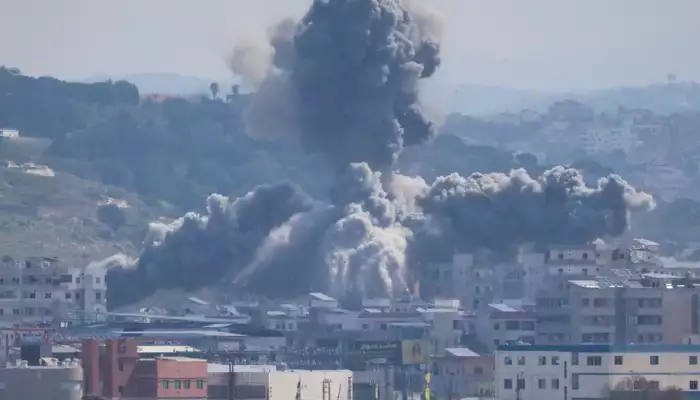
Vance also said Israel had agreed to show restraint, even after it carried out its largest attack since March 2, killing over 180 people.
"The Israelis, as I understand it ... have actually offered to, frankly, to check themselves a little bit in Lebanon, because they want to make sure that our negotiation is successful," Vance said.
"If Iran wants to let this negotiation fall apart... over Lebanon, which has nothing to do with them, and which the United States never once said was part of the ceasefire, that's ultimately their choice," the vice president said.
Death toll from Israel's large-scale attacks on Wednesday at 182
Lebanon's Health Ministry has put the death toll from Israel's large-scale attacks on Wednesday at 182, the highest single-day death toll since the most recent conflict with Israel began on March 2.
The ministry added that 890 people had been wounded.
A figure from the Lebanese civil defense service earlier put the death toll at 254.
Lebanese Prime Minister Nawaf Salam announced late on Wednesday that Thursday would be a day of mourning for all those who were killed.
Meanwhile, the International Committee of the Red Cross (ICRC) said it was "outraged by the devastating death and destruction."
"People across Lebanon were holding their breath for a ceasefire agreement, but a wave of deadly strikes plunged the country into panic and chaos," said Agnes Dhur, the ICRC's head of delegation in Lebanon.
"Many who had begun thinking of the moment when they might return to their homes have been rushing to streets and hospitals, searching for missing loved ones or seeking a safety that feels increasingly out of reach."
https://p.dw.com/p/5Bsv1